Day 23 - In Waiting
As a bride awaiting her bridegroom, so, the Church adorns herself with righteousness and eager expectation of His return.
FIRST 40 DAYS IN CHRIST
1/17/2001

40 Days
A Hermeneutic Foundation for a Lifetime of Growth
Day 23: In Waiting


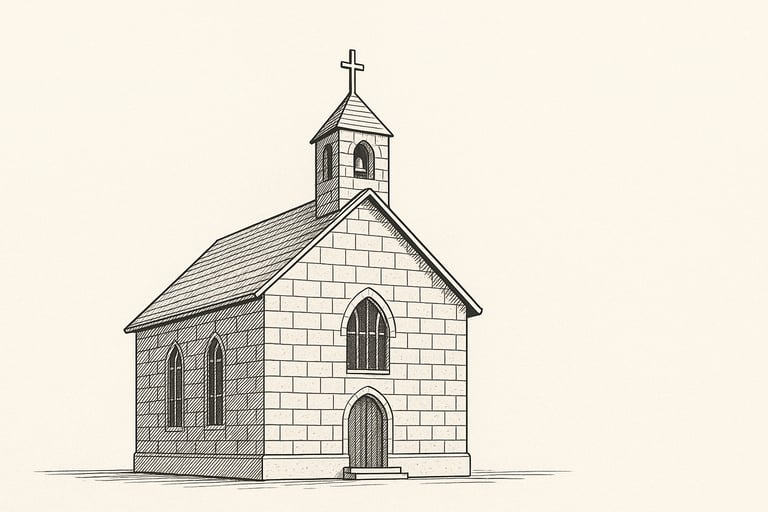
My guess is that your mind went to a familiar wedding ceremony. Perhaps you included the bride's entrance in stunning array, the solemn exchange of vows, the announcement and applause, maybe the casting of rice…perhaps even the week long celebration that accompanied, say, a Jewish wedding. The analogy is ripe with intensity, depth of emotion, and promise of future relationship. Did your mental image happen to include any detail around the role of the groom's father and mother?
The significance of God the Father and God the Holy Spirit in the marriage of God the Son (the Lamb in Revelation 19:6-9) may be lost in our modern conception of a typical wedding. The Biblical analogy was first communicated to a culture where arranged marriages were the norm, bridal consent was required, and bridal-price was expected. The “ceremony” consisted of at least two stages: the initiation betrothal (erusin, presently called kiddushin) and the completion (kicha, presently called nissu'in). During the twelve month period between them, the groom would prepare a home by adding onto his father's house. At a date approved by the groom's father, the groom would launch the festal affair to bring the bride home for the final ceremony (and consummation). These Jewish traditions predate the Talmud (200-500 AD) and were derived directly from examples in the Tanakh (the scriptures in our Old Testament).
The Church is in the betrothal period and awaiting the completion ceremony (Heb 9:28). Christ has been preparing a heavenly place for His Church for 2000 years (John 14:1-3). Consider some other parallels.
Arranged Marriage: It was God's plan, from all eternity past, to glorify Himself in the Church (Eph 3:10). No one can come to Christ unless the Father enables him to come (John 6:65) and the Spirit moves them (1 Cor 12:3). He has chosen us (1 Pet 2:9, Eph 1:4, John 15:16).
The Bridal Price: Christ is a gift (John 3:16), given to make the way to reconciliation possible (2 Cor 5:18). Our faith is a gift from Him (Eph 2:8) and one might read Eph 4:11 to say that God gave leadership to the Church. Does our inheritance in Christ count as part of the Bridal gift (Eph 1:11-14)?
Completion Ceremony: History culminates in the wedding of the Lamb (Rev 19:7) according to the Father's schedule (Matt 24:36). As in the Jewish tradition, the groom will retrieve His bride (Rev 19:11-18) and remove her from her dark environment (Matt 25:1-12, Rev 19:19- 20:15).
God designed marriage (in Genesis 2) to reflect pre-existing spiritual truths. God then embedded imagery of these truths in the Jewish wedding ceremony. Embedding this imagery in the culture was essential to a people without the written word. They lived these truths for centuries before their scripture was canonized.
Rabbi Maimon (an influential medieval Jewish scholar sometimes known as Rambam) speculated about the meaning of this unexpected betrothal period that was institutionalized in his culture.
"…it defines the committed relationship – and the commitment to the relationship – in terms that are not just about the physical or the lived relationship together. Marriage, to last, requires a commitment to each other that must be prior to and at times must transcend the current emotional and physical relationship. " - Rabbi Moses Ben Maimon
How accurately do you think Rambam's proposal answers the Christian wondering why must we wait so long for Christ's return?
To be a wife, one must first be a bride. Take a moment and imagine the Church as the bride of Christ. Close your eyes if you need to and imagine in as much detail as possible…the setting, the event, the actors, the colors, the sounds, maybe even the textures.
Interdependent
Frequently asked questions
1
...
2
..
3
..
4
...
5
..
johna.gain100ad@gmail.com
Copyright © 2025 - my40Days